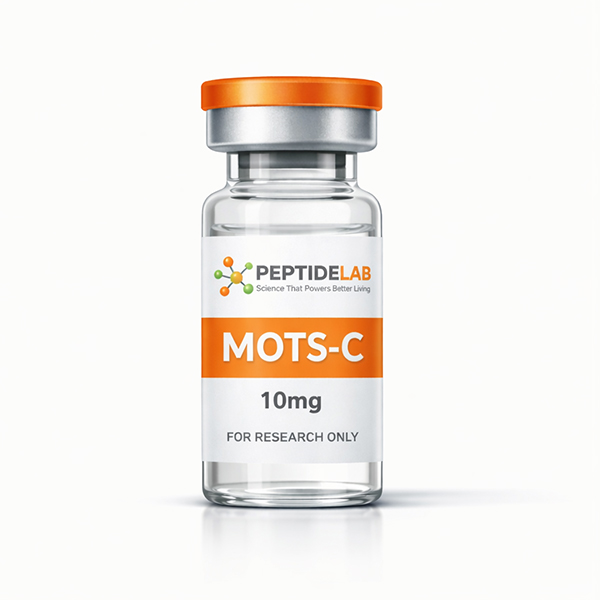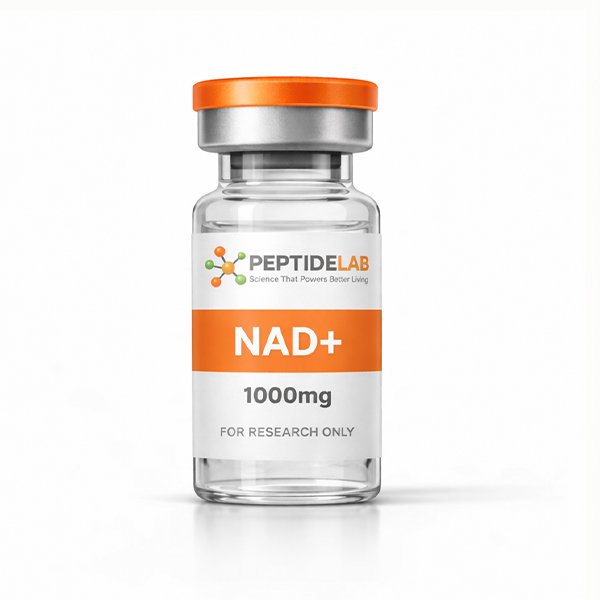
Packaging Box Includes:
- 1 × Peptide vial
- 1 × Bacteriostatic water vial
- 5 × Insulin syringes
- 1 × 3ml water syringe
- 6 × Alcohol swabs

Peptide Lab sells research products only, they are not for human consumption.
Nicotinamide adenine dinucleotide (NAD⁺) is a vital coenzyme involved in cellular metabolism, DNA repair, and mitochondrial function. In rat models, NAD⁺ supplementation has been extensively studied, revealing its potential in mitigating various pathological conditions.One significant area of research focuses on NAD⁺’s neuroprotective effects. In a study examining chronic cerebral hypoperfusion in rats, NAD⁺ administration improved cognitive function and reduced neuroinflammation by enhancing mitochondrial function and decreasing reactive oxygen species production. This suggests NAD⁺’s potential in treating neurodegenerative diseases.Furthermore, NAD⁺ has been implicated in enhancing exercise endurance. A study demonstrated that treatment with NAD⁺ and honokiol improved exercise capacity in rats by restoring SIRT3 levels in skeletal muscles and enhancing mitochondrial complex I levels.Safety assessments of NAD⁺ precursors like nicotinamide riboside (NR) have also been conducted. A 90-day oral toxicity study in Sprague-Dawley rats found no adverse effects at doses up to 1,200 mg/kg/day, supporting the safe use of NR in long-term studies.
Additionally, NAD⁺ supplementation has been shown to protect against spinal cord ischemia-reperfusion injury in rats by reducing oxidative stress-induced neuronal apoptosis, highlighting its potential in treating spinal cord injuries.
These findings underscore the therapeutic potential of NAD⁺ in various disease models. However, further research is necessary to fully elucidate its mechanisms and translate these benefits into clinical applications.
References
- Pei, Zuowei, et al. “The Role of NAD⁺ in Myocardial Ischemia-induced Heart Failure in Sprague-Dawley Rats and Beagles.” Current Pharmaceutical Biotechnology, vol. 25, no. 17, 2024, pp. 2300–2311. PubMed
- Ferdaus, Sara Amelia, et al. “NAD⁺ Deficiency Plays Essential Roles in the Hyperuricemia of Stroke-Prone Spontaneously Hypertensive Rat via Xanthine Dehydrogenase to Xanthine Oxidase Conversion.” Biochemical and Biophysical Research Communications, vol. 744, 2025, p. 151136. PubMed
- Zhang, Ning, et al. “NAD⁺ Improves Cognitive Function and Reduces Neuroinflammation in Rats with Chronic Cerebral Hypoperfusion.” Neuroscience Letters, vol. 748, 2021, p. 135700. PubMed
- Conze, Douglas, et al. “Safety Assessment of High-Purity, Synthetic Nicotinamide Riboside (Nicotinamide Riboside Chloride) in Sprague-Dawley Rats.” Toxicology Reports, vol. 7, 2020, pp. 1–10. PubMed
- Gökce, E. C., et al. “Protective Effect of Nicotinamide Adenine Dinucleotide Against Spinal Cord Ischemia-Reperfusion Injury in Rats.” Journal of Neurosurgery: Spine, vol. 24, no. 6, 2016, pp. 949–959. PubMed
Peptide Lab sells research products only, they are not for human consumption.
ALL LITERATURE, INFORMATION, AND DATA, PROVIDED ON THIS WEBSITE ARE FOR INFORMATIONAL AND EDUCATIONAL PURPOSES ONLY.
Lyophilized protein is to be stored at -20°C. It is recommended to aliquot the reconstituted (dissolved) protein into several discrete vials to avoid repeated freezing and thawing. Reconstituted protein can be stored at 4°C.
Related products
R980,00
R750,00
R1 100,00
Price range: R750,00 through R1 400,00